Soy protein is one of the most extensively studied plant proteins, which is both a strength and a source of confusion—various meta-analyses utilizing different types of soy, populations, and comparison groups frequently yield conflicting results. This guide compiles research over the last five years (2021-2025), identifies where older landmark studies continue to anchor the evidence foundation, and highlights where the science is truly decided versus still debated.
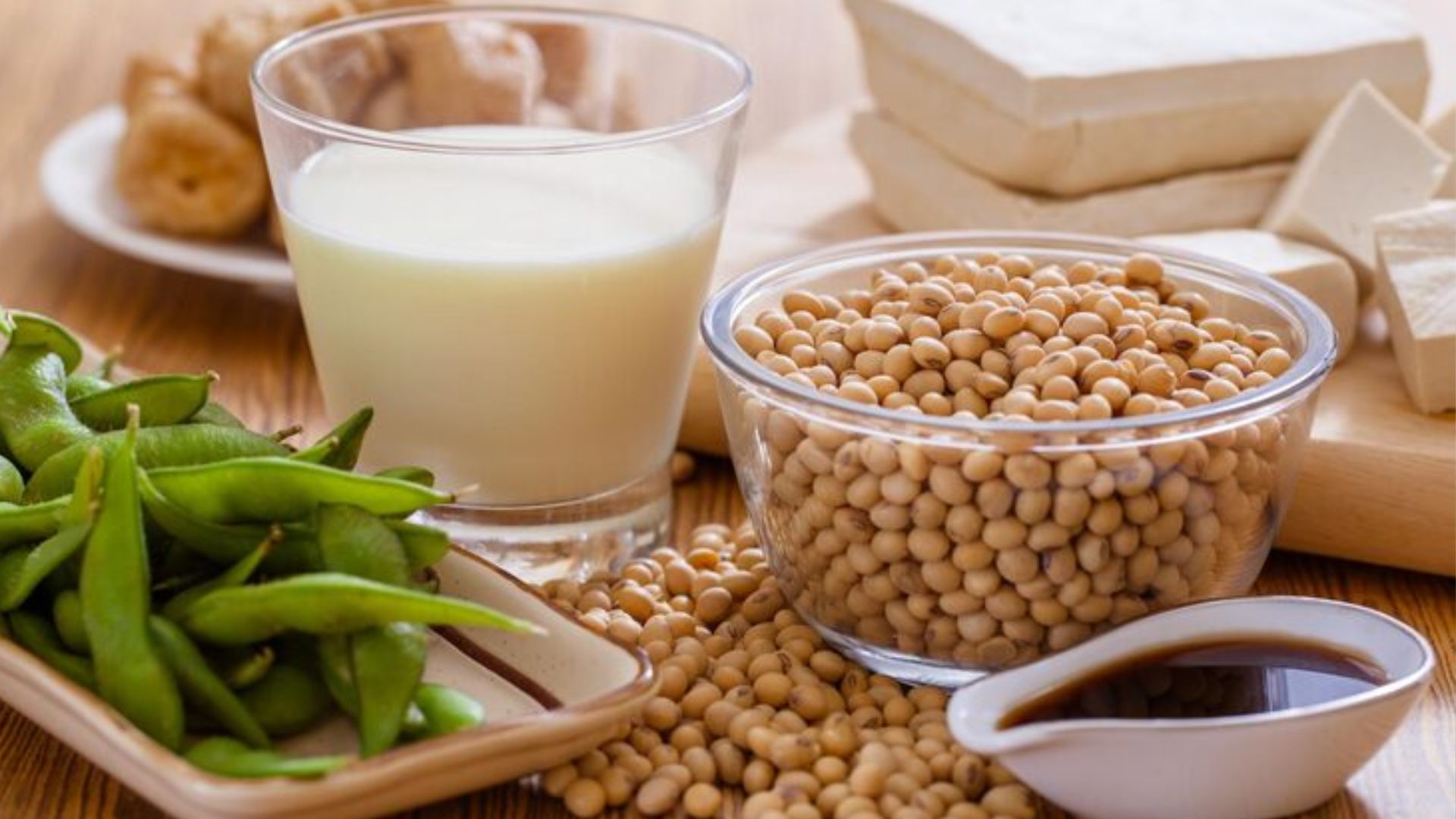
A note on soy forms, since it matters throughout: soy protein isolate (SPI, ~90% protein, isoflavones often reduced during processing) is what's in most protein powders; soy protein concentrate (~70% protein) retains more isoflavones and fiber; and whole soy foods (tofu, tempeh, edamame, soy milk) deliver protein alongside fiber, healthy fats, vitamins, and the full isoflavone profile. Many benefits attributed to "soy protein" are really benefits of whole soy foods or isolated isoflavones, not the isolated protein itself — this distinction gets called out below.
1. Muscle Building and Recovery
What's well-supported: Soy protein is a complete, high-quality protein capable of stimulating muscle protein synthesis (MPS) after resistance exercise via the same mTORC1 signaling pathway used by whey and casein. This is not contested.
What's more mixed: Head-to-head comparisons with whey protein over weeks-to-months of resistance training show no consistent advantage for whey in actual muscle mass or strength gains, even though whey produces a faster, larger acute spike in MPS in single-meal studies. A well-controlled 12-week randomized trial in men and women (leucine-matched doses of soy vs. whey isolate) found no significant differences in lean body mass or strength gains between the two groups. A 2023 systematic review of RCTs in athletes and active individuals reached a similar conclusion: across nine long-term trials, soy and animal protein supplementation produced comparable outcomes in lean mass and strength.
However, a 2024–2025 meta-analysis (12 trials, 261 participants, search through October 2024) found that while neither whey nor soy significantly increased lean body mass, whey did produce significantly better bench press and squat performance gains than soy — suggesting whey may still have an edge for strength-specific outcomes even when lean mass looks similar. This is a genuinely unresolved point.
Why the acute vs. long-term studies disagree: Soy has a lower essential amino acid content per gram and less leucine than whey, which explains its blunted acute MPS response. But over a full training cycle (12+ weeks), total daily protein intake and training stimulus appear to matter more than the acute per-meal kinetics — differences seem to emerge mainly in already-trained athletes or with shorter (<12 week) protocols, not necessarily in untrained people over longer periods.
Population/form notes: Most of this research uses soy protein isolate at doses matched for either total protein or leucine content (commonly 19–26 g/serving). Findings in older adults are less extensive than in young adults (18–35); a 2025 systematic review focused specifically on recovery from exercise-induced muscle damage found soy comparable to other plant proteins but called the overall evidence base for plant proteins in this specific outcome still "growing."
Bottom line: Solid evidence that soy protein supports muscle maintenance and growth similarly to whey for most people over a full training program; some evidence whey may modestly outperform on strength-specific gains, which remains unsettled.
2. Cardiovascular Health
What's well-supported: This is soy's best-established benefit. A meta-analysis of 46 RCTs (the dataset the FDA reviewed) found soy protein reduces LDL cholesterol by about 4.3%, plus modest reductions in total cholesterol. A 2024 meta-analysis of high-quality protein sources in people with metabolic disease found soy protein supplementation significantly lowered systolic blood pressure, total cholesterol, and LDL cholesterol. In people with type 2 diabetes specifically, a 2022 meta-analysis (22 RCTs, published Advances in Nutrition) found soy product consumption significantly reduced triglycerides, total cholesterol, LDL cholesterol, and C-reactive protein (an inflammation marker).
Context on magnitude: The FDA's original 1999 health claim was based on a roughly 3–4% LDL reduction, which some independent statistical re-analyses (2021) have argued is small enough that its real-world clinical significance is debatable, even though it's statistically significant across pooled trials. This is worth knowing: soy's cardiovascular benefit is real but modest — comparable in size to the effect attributed to nuts or other plant foods, not a dramatic cholesterol-lowering intervention on its own.
Mechanism debate: Part of the cholesterol-lowering effect appears to come from displacement — replacing saturated-fat-containing animal protein with soy — rather than from an intrinsic property of soy protein itself. Estimates suggest displacement alone could account for roughly half the observed LDL reduction.
Population notes: Effects appear most consistent in people who start with elevated cholesterol (hypercholesterolemia) and in postmenopausal women, where a 2021 meta-analysis (2,305 participants) found soy protein plus isoflavones improved total cholesterol and HDL, though the LDL and triglyceride changes in that analysis didn't reach statistical significance (p = 0.08 and 0.06, respectively) — a good example of a "trending but not confirmed" finding.
Bottom line: Well-supported, modest LDL/total cholesterol reduction, most robust in people with existing dyslipidemia or diabetes; effect size is real but should not be oversold as a major cardiovascular intervention on its own.
3. Bone Health
What's well-supported: In postmenopausal women, soy isoflavones (not soy protein per se — this is an isoflavone effect) produce a small but statistically significant improvement in bone mineral density (BMD). A 2022 meta-analysis of 18 RCTs found daily isoflavone doses of ~106 mg over 6–24 months modestly improved BMD at the lumbar spine (+1.6%), femoral neck (+1.9%), and total hip (+0.4%). A more recent 2023/2024 meta-analysis (published in Osteoporosis International) confirmed statistically significant BMD improvements at the lumbar spine and femoral neck.
What's contested: Effects on bone turnover markers (blood/urine markers of bone formation and breakdown, used as a faster readout than BMD scans) are inconsistent. A 2021 meta-analysis found only non-significant trends toward improved bone formation and reduced resorption markers, concluding more research was needed — while an older, smaller meta-analysis had reported much larger effects on resorption markers. The size of the isoflavone effect on BMD also depends heavily on dose (benefits concentrate above ~75 mg/day), duration (studies of 2+ years show clearer effects than shorter ones), and ethnicity (effects appear more consistent in Asian populations, possibly related to gut bacteria that metabolize isoflavones into the more bioactive compound equol).
Important caveat: This entire body of evidence is about isoflavone supplements or isoflavone-rich soy foods, not soy protein isolate stripped of isoflavones (which is common in protein powders). If you're using a low-isoflavone soy protein isolate for muscle-building purposes, you likely aren't getting this particular bone benefit.
Bottom line: Reasonably well-supported for whole soy foods or isoflavone-containing soy protein in postmenopausal women specifically; not established for young adults, men, or isoflavone-stripped protein isolates, and the underlying mechanism (bone turnover markers) is still weaker evidence than the BMD outcome itself.
4. Hormonal Effects
This is the area with the most public confusion, so it's worth separating three distinct questions.
(a) Does soy affect testosterone or estrogen in men? No, according to the best current evidence. A 2022 meta-analysis of 41 RCTs — the most comprehensive to date — found neither soy nor isolated isoflavones altered testosterone or estrogen levels in men. Related research also found no effects on sperm or semen quality. This effectively closes a long-running concern, though the myth persists in fitness and bodybuilding communities.
(b) Does soy affect breast cancer risk? The evidence has shifted meaningfully over the past several years toward reassurance, though nuance matters:
- A 2022 meta-analysis (In Vivo) found an inverse relationship between isoflavone consumption and breast cancer risk in both pre- and post-menopausal women.
- A 2023 dose-response meta-analysis of observational studies found no significant difference in this protective association based on menopausal status or estrogen-receptor status of the cancer.
- Population data consistently show women in high-soy-consumption countries (e.g., Japan) have substantially lower breast cancer incidence than Western populations, with early-life (adolescent) soy intake appearing to carry the most protective signal — though this is observational, not causal, evidence.
- One earlier meta-analysis flagged that formononetin (a specific isoflavone, less common in typical soy foods) showed an association with increased risk in some analyses — a detail that complicates the "soy is simply protective" narrative and hasn't been fully resolved.
Major oncology and nutrition bodies (American Cancer Society, American Institute for Cancer Research) generally now consider moderate soy food consumption safe for breast cancer survivors, reversing older blanket caution — but this guidance is based on epidemiological and mechanistic reassurance rather than long-term RCTs in cancer survivors specifically, so I'd flag it as well-supported for prevention/general population, more provisional for people currently in active cancer treatment, where individualized oncologist guidance still matters.
(c) Thyroid function: This is the least settled of the three. Isoflavones can inhibit thyroid peroxidase in vitro, and some clinical data suggest soy may increase thyroid hormone levels specifically in people who are already iodine-deficient or hypothyroid, while having negligible effect in people with normal thyroid function and adequate iodine intake. I could not find a robust, recent (post-2021) meta-analysis directly quantifying soy's effect on thyroid hormones in humans at typical dietary intakes — treat specific numeric claims about soy and thyroid function with caution, and if you have a thyroid condition, this is worth discussing with your doctor rather than relying on general dietary advice.
Bottom line: Testosterone/estrogen concerns in men are well-refuted by recent evidence. Breast cancer risk evidence has moved from "cautionary" to "likely neutral-to-protective," though not from head-to-head RCTs. Thyroid interaction evidence is real but mostly relevant to a specific subgroup (iodine-deficient or hypothyroid individuals) and isn't well-quantified in recent literature — flagged here as unverified for the general population.
5. Digestive Health
What's supported: Both animal and human studies show soy food consumption can increase beneficial gut bacteria (Bifidobacteria, Lactobacillus), and the oligosaccharides in whole soy foods (raffinose, stachyose) act as prebiotic fiber, fermenting into short-chain fatty acids that feed colon cells and support gut barrier function. A comprehensive 2023 narrative review (Nutrients) covering clinical, observational, and animal data on soy and GI health found generally favorable effects, though the authors were careful to describe evidence as "emerging" rather than conclusive for most specific GI disease outcomes.
What's more preliminary: Fermented soy products (tempeh, fermented soy milk) show more consistent, larger microbiome changes than unfermented soy protein isolate — largely because fermentation itself introduces beneficial bacteria and increases bioavailable isoflavones. Effects on colorectal cancer risk specifically are described in the literature as "inverse or no relationship" — favorable, but not strong enough to call it established prevention. An ongoing EU-funded trial (MICROBIOMES4SOY, results expected after 2024) is specifically testing whether replacing animal protein with soy-based fermented products changes the human gut microbiome and inflammation markers — this is a case of research actively in progress, not yet reportable as a finding.
Important caveat: Soy oligosaccharides, precisely because they're not digested in the small intestine, can cause bloating and gas in some people — the same fiber that feeds beneficial bacteria can cause GI discomfort during an adjustment period, particularly with a sudden increase in whole soy food intake.
Bottom line: Directionally positive and biologically plausible, well-documented in animal studies, but the human clinical evidence for specific disease outcomes (colorectal cancer, IBD) remains early-stage. Whole/fermented soy foods show more consistent effects than isolated soy protein powder.
6. Nutrient Bioavailability vs. Animal Protein
What's well-supported: Soy is one of the very few plant proteins classified as "complete" (containing all nine essential amino acids in meaningful amounts), which is why it's used as the standard comparison point in plant-protein research. Its protein quality scores are strong for a plant source but still measurably below top animal proteins on the more precise measurement standard:
- PDCAAS (older method, caps at 1.0, based on fecal digestibility): soy protein isolate scores around 0.90–1.0, close to animal proteins like whey and egg (0.92–1.0).
- DIAAS (newer, more accurate method using ileal digestibility, not capped at 1.0): unprocessed soy products score around 84–86, compared to roughly 90+ for whey and higher still for egg. A 2022 quantitative review found soy's average DIAAS across various processed forms was 84.5, essentially matching its PDCAAS score, though this varies notably by processing method (isolate generally scores higher than concentrate or flour).
- One frequently cited 2023 comparison found participants absorbed markedly less usable amino acid content from 30g of a plant isolate than from 30g of whey — illustrating that gram-for-gram, some plant proteins deliver less usable protein than the label suggests, though soy specifically performs better on this metric than weaker plant proteins like rice or wheat.
What's contested/oversimplified: Some marketing content states plant proteins "average" around 0.58 DIAAS — this figure is real but reflects an average across a wide range of plant proteins (including much weaker ones like wheat and corn) and shouldn't be read as representative of soy specifically, which performs considerably better than that plant-protein average.
Practical implication: For someone eating adequate total protein and varied food sources, soy's slightly lower amino acid bioavailability compared to animal protein is unlikely to matter meaningfully. It becomes more relevant for people with high protein needs relative to appetite (e.g., older adults at risk of sarcopenia, some clinical populations) where a 2025 review noted that vegan diets with lower bioavailable essential amino acid intake have been associated with reduced bone mineral content and stature in children — a signal that protein quality, not just quantity, matters more in higher-need populations.
Bottom line: Soy is genuinely one of the strongest plant protein sources for bioavailability, meaningfully below top animal proteins by a modest margin, and the gap is easily closed by eating a bit more total protein or combining with other protein sources — not a reason to avoid soy, but relevant context if your protein intake is otherwise marginal.
Summary Table
| Dimension | Evidence strength | Key caveat |
|---|---|---|
| Muscle building/recovery | Solid for equivalence with whey over full training programs | Whey may still edge out on pure strength gains; unresolved |
| Cardiovascular health | Solid, most-replicated benefit | Effect size is modest, partly from displacing saturated fat |
| Bone health | Solid for postmenopausal women, isoflavone-dependent | Doesn't apply to isoflavone-stripped protein isolate |
| Hormonal (testosterone/estrogen, men) | Solid — no effect found | Long-standing myth, now well-refuted |
| Hormonal (breast cancer) | Reasonably solid, trending reassuring | Based on observational/epidemiological data, not RCTs in survivors |
| Hormonal (thyroid) | Weak/unclear | Relevant mainly if iodine-deficient or hypothyroid |
| Digestive health | Preliminary but promising | Fermented/whole foods outperform isolate; ongoing trials pending |
| Bioavailability vs. animal protein | Solid | Modestly lower than top animal proteins; easily offset by intake |
Practical Takeaways
If you're debating whether to incorporate soy protein into your diet, consider the following: the cardiovascular and muscle-building evidence is strong enough to act on with confidence, the old testosterone/estrogen fears in men are not supported by current data, and whole soy foods (tofu, tempeh, edamame) generally provide more bone and digestive benefits than protein powders. The truly open questions — thyroid interaction in susceptible individuals, precise strength-training outcomes vs. whey, and long-term GI disease outcomes — are reasonable topics to discuss with a doctor or dietitian if they apply to your specific situation (existing thyroid condition, competitive strength training, active cancer treatment) rather than reasons to avoid soy entirely.