Some days, an hour at the gym simply isn't feasible. What is the good news? You do not need one. A well-structured 20-minute bodyweight session may burn calories, activate nearly every major muscle group, and leave you as exhausted as a lengthier workout — if you use your time wisely.
This practice is based on compound movements, which are exercises that work numerous muscle groups and joints at the same time. They burn more energy per minute than isolation routines (think bicep curls) and mirror real-world movement patterns, so trainers and organizations like the American Council on Exercise consistently recommend them for time-efficient training.
You'll need nothing but floor space and, ideally, a timer on your phone. Here's exactly how the 20 minutes breaks down.
Warm-Up (5 Minutes)
Skipping the warm-up is tempting when time is tight, but it's exactly what primes your joints and raises your heart rate so the main circuit doesn't feel like a shock to the system.
- Arm Circles — 30 seconds. Small circles forward, then backward. Loosens the shoulders and upper back.
- Jumping Jacks — 1 minute. A full-body pattern that raises your heart rate and warms up the hips, shoulders, and calves.
- Bodyweight Squats — 1 minute. Slow and controlled. Keep your chest up and knees tracking over your toes — this is a preview of the main circuit's primary lower-body move.
- High Knees — 1 minute. Drive knees toward chest at a quick pace. Activates hip flexors and core.
- Torso Twists — 30 seconds. Standing, rotate gently side to side to loosen the spine.
- Walking Hip Circles / Leg Swings — 1 minute. Alternate legs, swinging front-to-back and side-to-side to open the hips before lunging movements.
Main Circuit (12 Minutes)
This is the engine room of the workout: four compound exercises, each hitting a different combination of muscle groups, performed for 40 seconds of work followed by 20 seconds of rest. Complete the full four-exercise sequence three times through (4 exercises × 60 seconds × 3 rounds = 12 minutes).
1. Bodyweight Squats 40 sec work / 20 sec rest Feet shoulder-width apart, hips back like sitting into a chair, chest tall. Aim for full range of motion without letting your lower back round. Primarily targets quads, glutes, and hamstrings, with core engagement to stabilize.
2. Push-Ups 40 sec work / 20 sec rest Hands slightly wider than shoulders, body in a straight line from head to heels. Drop to knees if needed to maintain form rather than letting your hips sag. Targets chest, shoulders, triceps, and core.
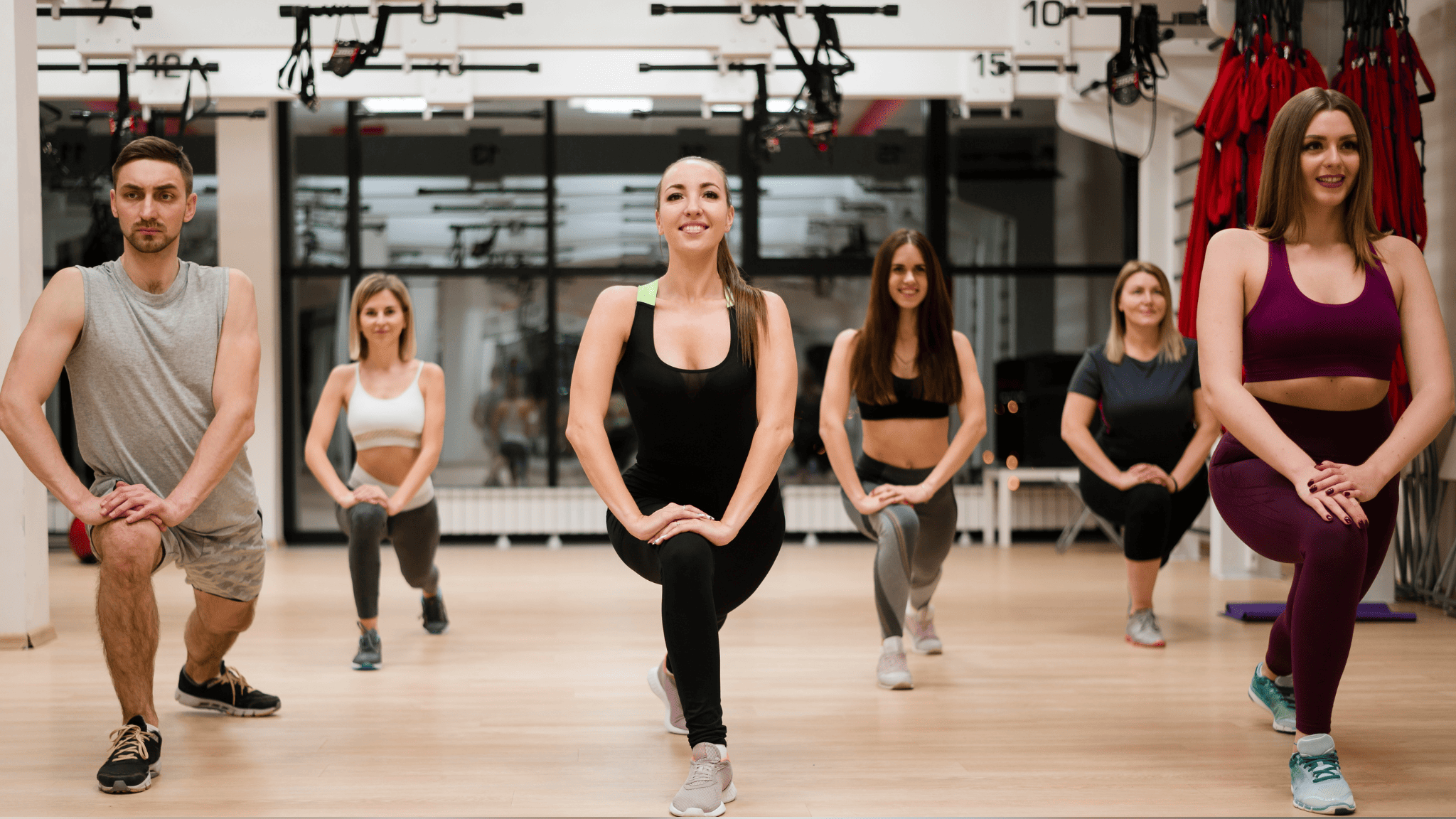
3. Alternating Reverse Lunges 40 sec work / 20 sec rest Step one leg back, lowering until both knees hit roughly 90 degrees, then drive back to standing. Alternate legs each rep. Keep your torso upright. Targets glutes, quads, and hamstrings, plus balance and core control.
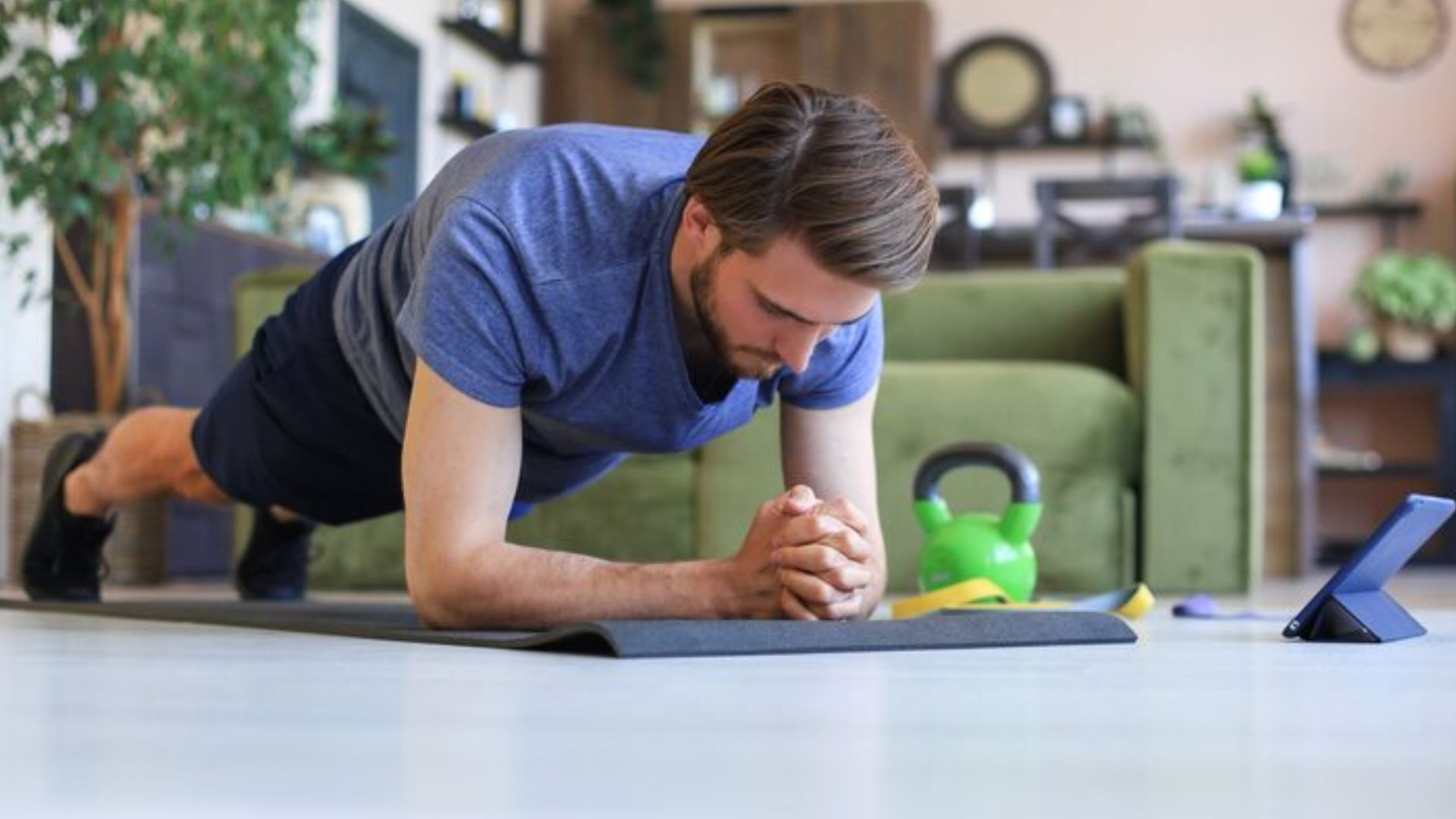
4. Mountain Climbers 40 sec work / 20 sec rest In a high plank, drive knees alternately toward your chest at a brisk pace. Keep hips low and avoid bouncing. This is your cardio spike within the circuit — it elevates heart rate while hitting core, shoulders, and hip flexors.
Pacing tip: By round three, expect fatigue to set in — that's the point. If form starts to break down (rounded back on squats, sagging hips on push-ups), slow the tempo rather than stopping. Quality reps beat rushed ones for both safety and results.
Cool-Down (3 Minutes)
Static stretching after the circuit helps bring your heart rate down gradually and starts the recovery process. Hold each stretch gently — no bouncing.
- Standing Quad Stretch — 30 seconds each side. Pull heel toward glutes, knees together.
- Standing Hamstring Stretch — 30 seconds each side. Hinge at the hips with a slight knee bend, reaching toward your toes.
- Chest and Shoulder Stretch — 30 seconds. Clasp hands behind your back and gently lift, opening the chest.
- Child's Pose with Deep Breathing — 30 seconds. Sit back on your heels, arms extended forward, and take slow breaths to reset before your day continues.
Why This Works
Twenty minutes doesn't sound like much, but with rest periods kept short and every exercise chosen for maximum muscle recruitment, this session keeps your heart rate elevated for the majority of the circuit — closer to an interval-training effect than a traditional strength session. Research summarized by the CDC's physical activity guidelines notes that even short bouts of vigorous activity contribute meaningfully toward weekly exercise targets, so consistency with a routine like this adds up over time.
Making It Harder or Easier
- Too easy? Add a fourth round, slow the tempo on the lowering phase of each rep, or swap standard push-ups for a more advanced variation.
- Too hard? Reduce work intervals to 30 seconds with 30 seconds of rest, or drop to two rounds instead of three while keeping the warm-up and cool-down intact.
Whatever your level, the structure stays the same — warm the body up, work it hard through compound movement, then bring it back down. That's a complete workout, no equipment or extra time required.