Buying your first pair of running shoes shouldn't feel this hard. But walk into a store or open a shopping app, and you're hit with words like "stack height," "drop," and "pronation" — like you need a degree before you're allowed to jog around the block.
You don't. Here's what actually matters, and six shoes worth trying.
What to Actually Look For
Cushioning. This is the padding between your foot and the ground. As a beginner, go soft, not firm. Your joints are still adapting to the impact of running, and a well-cushioned shoe takes the edge off every step. You'll feel the difference immediately — it's like walking on carpet instead of tile.
Support. Some runners' feet roll inward a bit when they land (this is called overpronation, and now you never have to think about that word again). If your ankles cave in noticeably when you stand barefoot, look for a "stability" shoe. If your gait feels normal, a "neutral" shoe is fine. When in doubt, go neutral — most beginners don't need extra correction.
Fit. This one matters more than any spec. Leave a thumb's width of space between your longest toe and the front of the shoe. Your foot swells slightly on runs, so a snug fit at the store can feel tight by mile two. Try shoes on in the afternoon, when your feet are naturally a bit larger.
Durability. A decent beginner shoe lasts 300 to 500 miles — roughly six to nine months if you're running a few times a week. You don't need to overthink this upfront. Just know that when the cushioning starts feeling flat or your shins start complaining, it's time for a new pair.
Price. You do not need a $250 shoe to start running. Anything in the $100-$150 range from a real running brand will do more for you than a flashy $250 pair will. Save the splurge for once you know what you like.
Six Beginner-Friendly Shoes Worth Trying
| Shoe | Best For | Price Range | Buy Now |
|---|---|---|---|
| Brooks Ghost 17 | All-round first shoe | 22,557. | Buy Now → |
| Hoka Clifton 10 | Extra cushioning, sore knees | 25,310. | Buy Now → |
| ASICS Gel Nimbus 27 | Longer runs (3-5+ miles) | 25,310. | Buy Now → |
| New Balance 880v15 | Wide or hard-to-fit feet | 30,020 | Buy Now → |
| ASICS Novablast 5 | Budget pick | 8,399 | Buy Now → |
| Brooks Adrenaline GTS 23 | Extra support (overpronators) | 31,732 | Buy Now → |
1. Brooks Ghost 17 — Best all-rounder This is the shoe most running stores hand a first-timer, and for good reason. It's soft without feeling mushy, and it doesn't ask anything of you — no learning curve, no "getting used to it." You just put it on and run.
2. Hoka Clifton 10 — Best for extra cushioning If you're worried about sore knees or you're coming back from a long break, this is your shoe. It has a noticeably thick sole but somehow stays light on your feet, so it never feels clunky. Runners describe it as running on a cloud, and that's not far off.
3. ASICS Gel Nimbus 27 — Best for longer runs Once you build up to 3-5 mile runs, this shoe really shines. It holds its cushioning well over distance and doesn't break down halfway through your run the way cheaper shoes can. A little pricier, but built to last.
4. New Balance 880v15 — Best for wide or hard-to-fit feet This is the one to try if you've struggled to find shoes that fit comfortably in general, not just running shoes. It comes in multiple widths, and the upper is roomy without feeling sloppy or unsupportive.
5. ASICS Novablast 5 — Best budget pick The newer Novablast 6 gets more attention, but the previous version is now discounted and still genuinely great. It's bouncier and a little more energetic underfoot than most beginner shoes, which makes easy runs feel less like a grind.
6. Brooks Adrenaline GTS 23 — Best for extra support (overpronators) If your ankles roll in when you stand barefoot, this is the stability shoe to start with. It gently guides your foot into a straighter position without feeling like it's fighting your natural stride.
One Last Thing
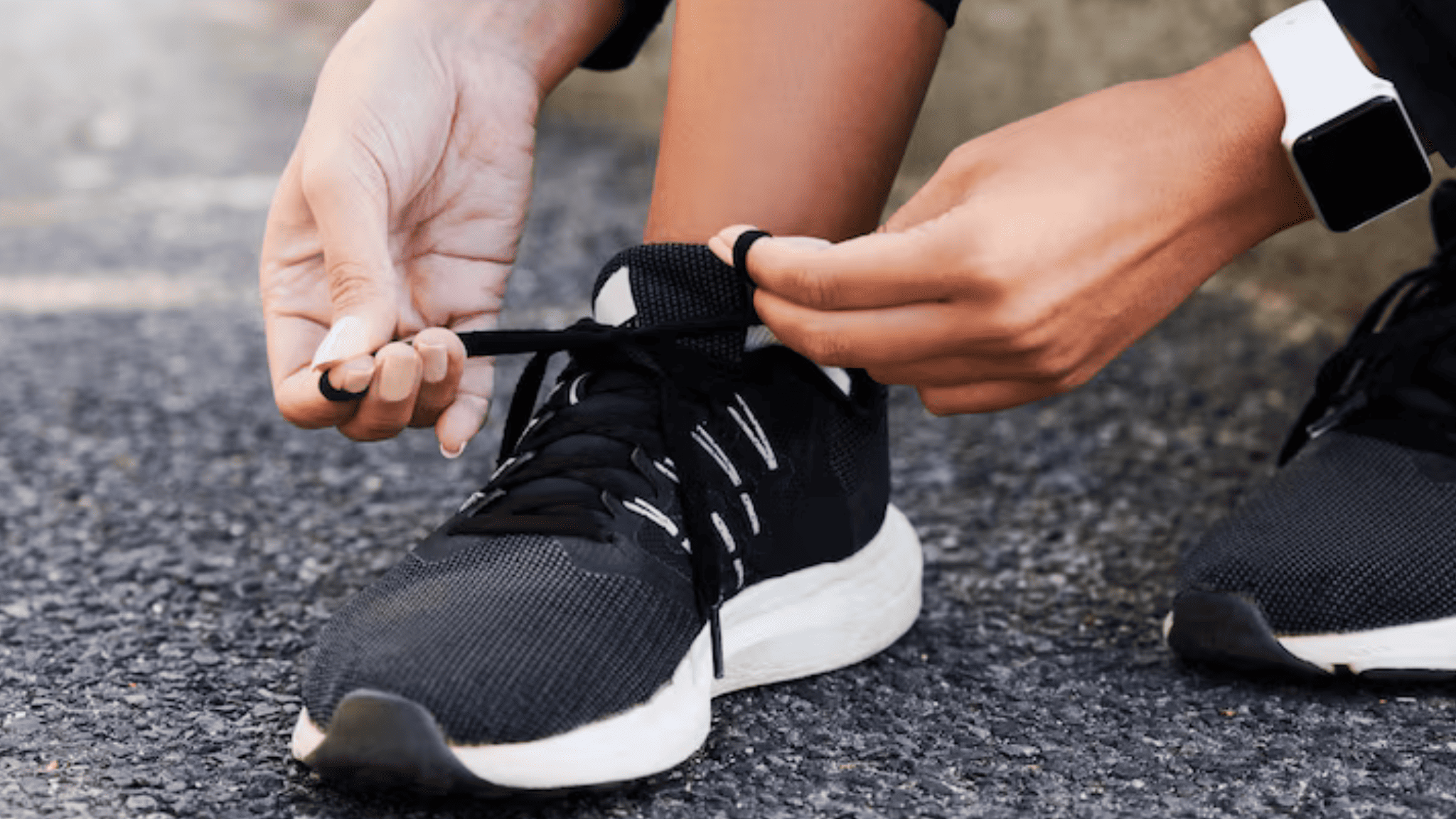
Don't buy a shoe just because it's what your favorite runner wears or what's trending online. The best first shoe is the one that feels good the moment you lace it up — no breaking in required. If it pinches, rubs, or feels "off" in the store, it'll feel worse three miles in.
Try a couple of pairs if you can. Trust your feet over the spec sheet. And once you've got the right shoes on, the hardest part of running is already behind you.
As an Amazon Associate, this article may earn from qualifying purchases made through the links above, at no extra cost to you.